I WAS TWENTY-TWO WHEN I WROTE ABOUT MENOPUASE
Writer and Recent Filmmaker, Caroline Huckeba, on the Experience of Womanhood and Women in Film
august 18, 2026 - BY Caroline huckeba
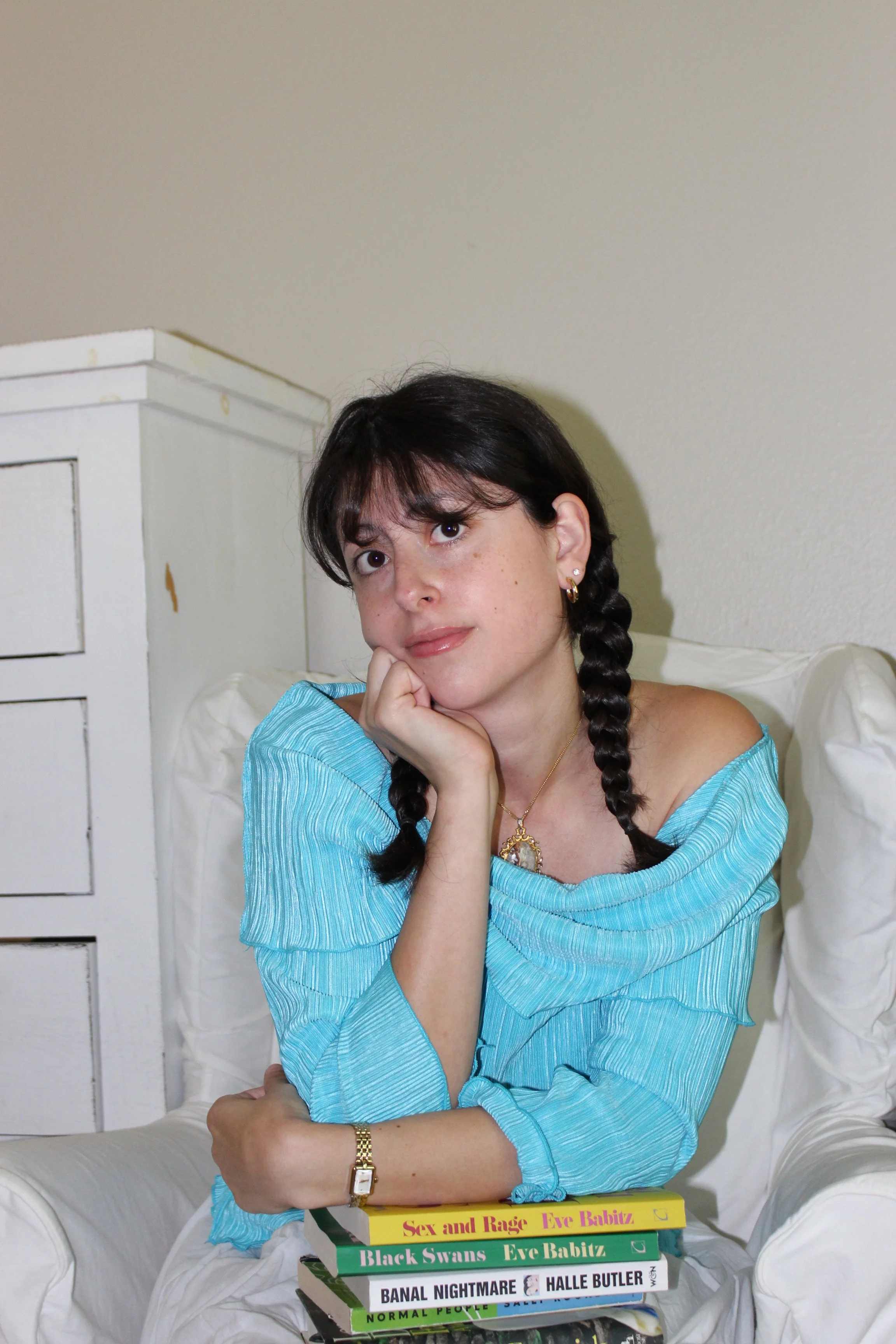
Courtesy of Caroline Huckeba
In my last year of college, I wrote a ten-page screenplay about menopause.
I was twenty-two.
This was not, technically, a screenplay about menopause. It was about a woman who unexpectedly discovers she is perimenopausal at the gynecologist and, on her way out, steals a goldfish from the lobby aquarium.
She takes the fish home.
The fish is meant to represent several things at once: her last dying eggs, the baby she never had, the possibility of motherhood slipping away from her. It is also, perhaps, simply a fish. I have always liked writing things that refuse to explain themselves completely.
The screenplay was called, Can a Parent Give You a Sad Face?
It was an ambitious thing to attempt in ten pages. I wanted to write about perimenopause, the generational exchange of grief, and the strange experience of losing something you never actually had. More than anything, I wanted to write about the particular sadness of realizing that a version of your life may be closing before you have even decided whether you wanted it.
I wrote it for my final project in a screenwriting class taught by Paula Goldberg, who remains one of the coolest professors I have ever had.
Once, Paula walked into class playing “Stoney End” by Barbra Streisand.
She had also casually mentioned that she had once been roommates with Kristen Davis, who played Charlotte York in Sex and the City. I was, and remain, a Charlotte girl, so naturally I interpreted this as some sort of spiritual connection.
Paula liked my script.
That was enough for me.
A classmate suggested that I pitch it at the Dallas Film Association’s Pitch Fest. I had never really thought of myself as someone who pitched things. I was a writer. Writers, in my mind, were supposed to sit alone somewhere and make things up and then become vaguely nauseous when someone else read them.
But I went.
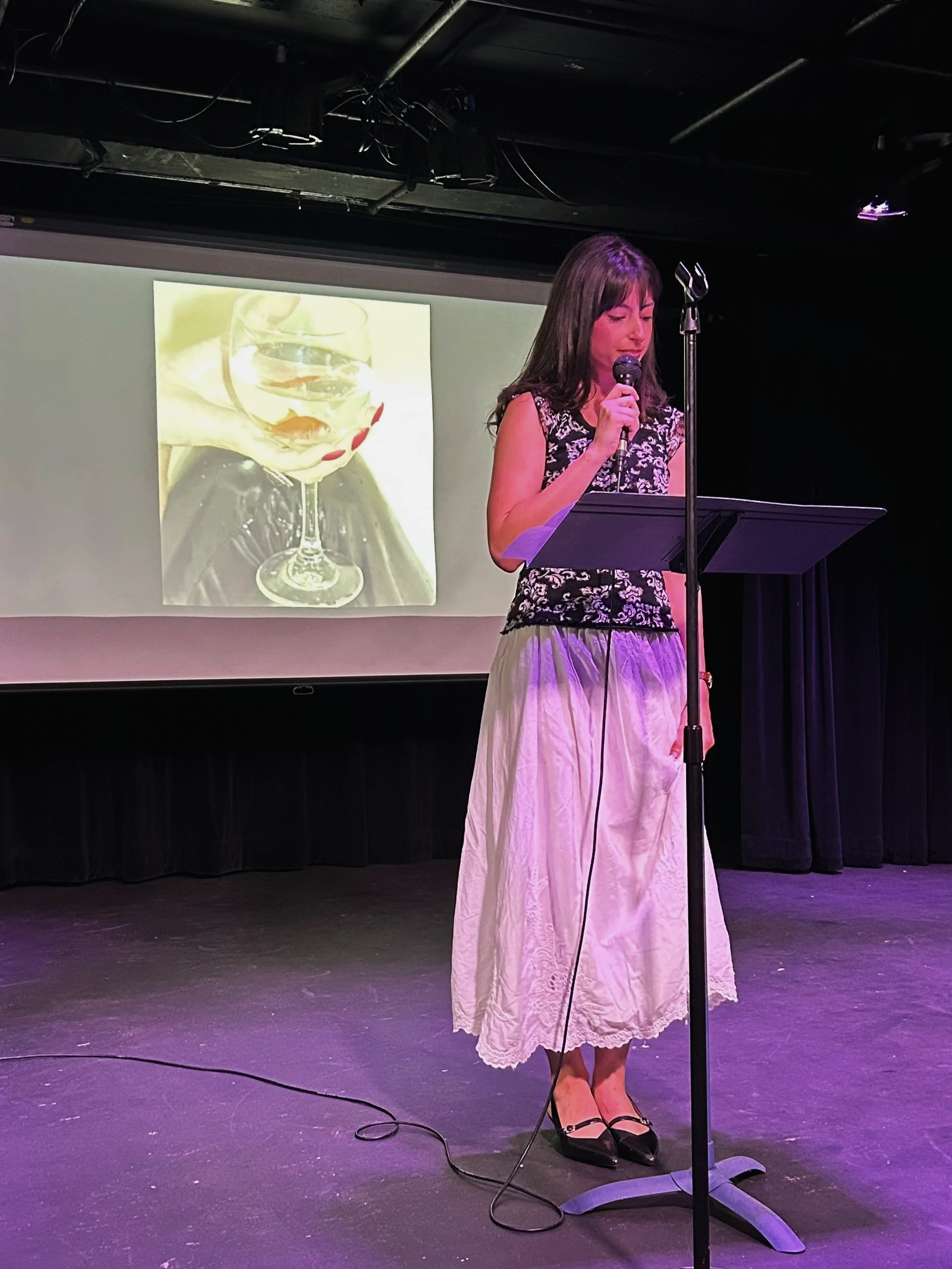
The finalists were me and five or six men in their thirties. Some of them had prepared actual business presentations. I had a photograph of a goldfish in a wine glass.
And I had two things I knew how to talk about: Fleabag and the female experience.
That was basically my presentation.
The idea for the film had been inspired by a monologue from Fleabag about women's relationship to pain. In it, menopause is framed not simply as an ending but as a strange kind of liberation—the moment when a woman is no longer a body organized around reproduction, no longer a machine with parts and expectations attached to them, but simply a person.
That idea had lodged itself somewhere inside me.
I didn't know what it meant to be menopausal. I didn't know what it meant to have your reproductive life change in that way. I barely knew what it meant to be twenty-two.
But I knew what it felt like to be told that your body was a timeline.
I knew what it felt like to imagine a future and wonder which parts of it were actually yours.
So I stood in front of a room full of people and tried to explain why a woman stealing a goldfish from a gynecologist's office could somehow contain all of that.
Then I returned to my seat.
I sat beside a beautiful woman with the posture of someone confident and brave.
She handed me her business card.
Her name was Jessica Duval, co-owner of Lobo AR LLC.
She would eventually become one of the people responsible for turning Can a Parent Give You a Sad Face? from a ten-page document on my laptop into an actual film.
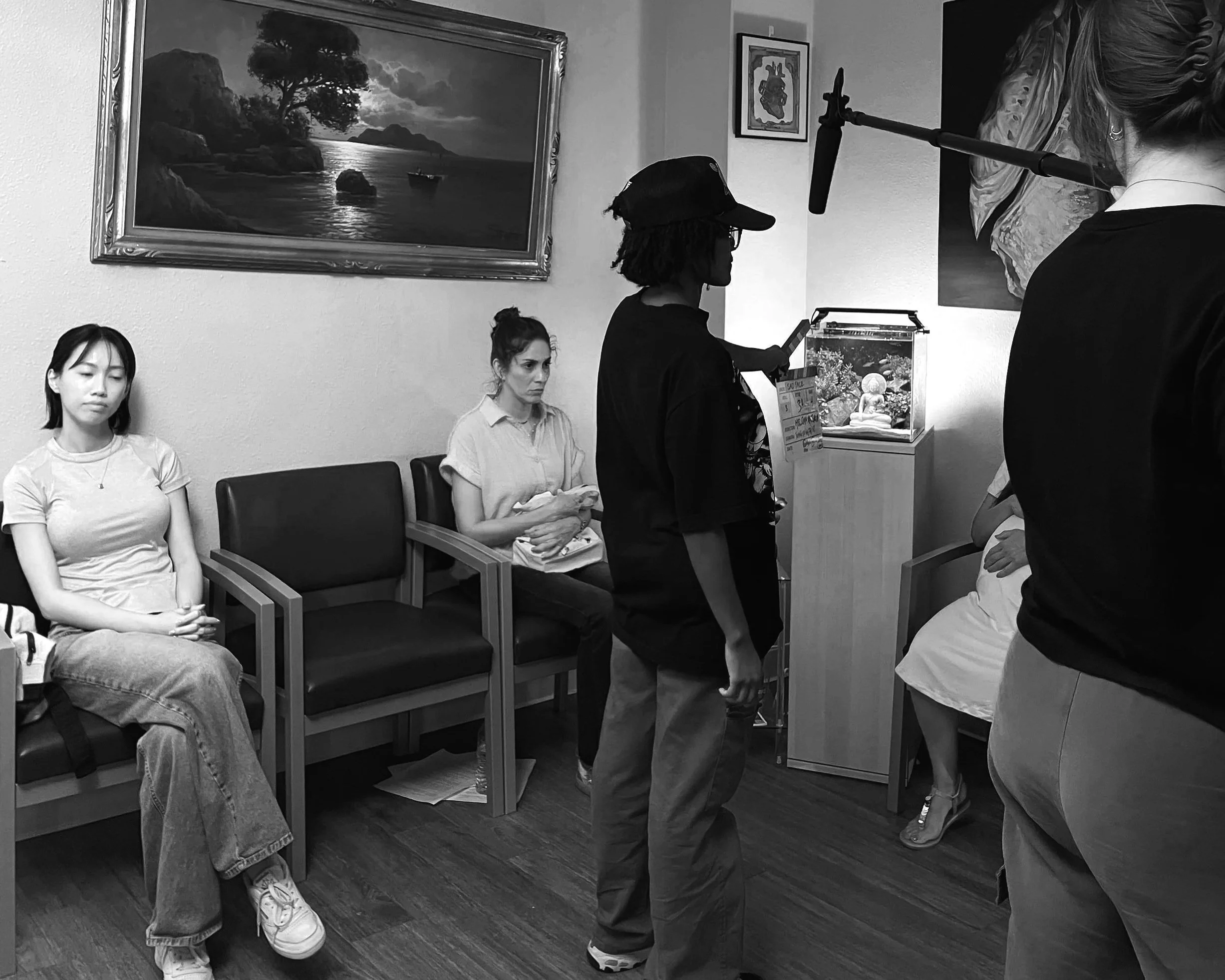
The set of Can a Parent Give You a Sad Face? (2027) courtesy of C. Huckeba
I won.
Suddenly, people were approaching me.
They wanted to act in the film. They wanted to shoot it, edit it, help produce it, work as PAs. People introduced themselves using filmmaking terms I had never heard before. I nodded like I knew exactly what they meant and then went home and Googled them.
One of the strangest questions I received was some variation of:
Why is a twenty-two-year-old girl thinking about menopause?
It was a fair question. I didn't have a particularly satisfying answer.
Maybe I was interested in menopause because it was something I didn't understand. Maybe I was interested in the lives of women who came before me because I was still trying to figure out what kind of woman I was becoming.
Or maybe I have always been interested in the emotional inheritance women pass between generations–the things our mothers teach us without meaning to, the fears we inherit before we understand them, the futures we are warned about and the ones we are never told to imagine.
I knew one thing very clearly: I wanted the film to be led by women.
Jessica was on the same page.
That became one of the most important parts of the project for me.
I had written the screenplay alone, sitting somewhere with a laptop, inventing a woman whose life I could never fully know. But making the film reminded me that writing is only the first act of believing in something.
Other people have to believe in it too.
The first day on set was surreal.
There is a particular kind of cognitive dissonance that happens when you see something you wrote become physical.
The sentences that had existed only in my head now had bodies. There were lights. Cameras. Costumes. A crew. Someone saying action.
The goldfish existed outside of my imagination.
And then I heard a clip of the soundtrack being composed by Kirsten Soriano.
It was gorgeous.
I remember thinking about how strange it was that something that had started as a ten-page script for a college final had accumulated all these people.
People I hadn't known existed when I typed the first sentence.
People who had brought their own talent, interpretation, time, and belief into this little strange story about a woman, a fish, and the grief of losing something you never had.
I had written the film because I was curious about a woman I couldn't yet be.
Then other people helped me make her real.
Maybe that is what I love most about filmmaking. You can begin with something embarrassingly small. A strange thought. A goldfish in a wine glass. And if you're lucky, someone else sees what you see. Then someone else sees it too.
And suddenly, you are standing on a film set, listening to your own words come back to you through someone else's voice, realizing that the thing you thought belonged only to you has become something communal.
I still don't know what it means to be a woman approaching menopause.
I'm still twenty-two, or twenty-three, or whatever age I am when someone asks me why I was thinking about it.
But I know now that maybe you don't have to live a life to write about the questions it leaves behind.
Sometimes you just have to be curious enough to ask them.
And sometimes, if you're very lucky, someone hands you a business card.
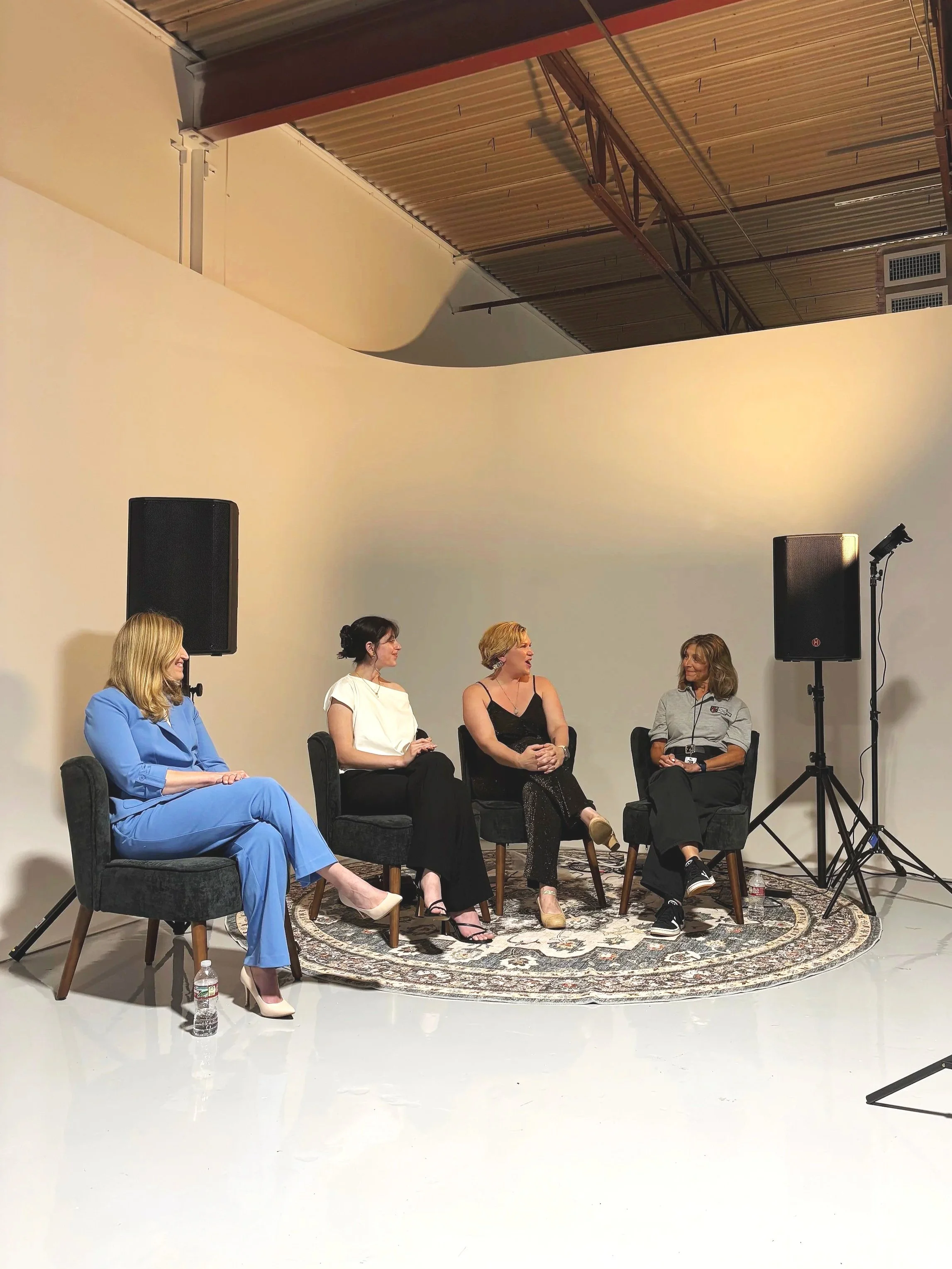
Caroline Huckeba, second from the left, courtesy of C. Huckeba
Can a Parent Give You a Sad Face? will be released in early spring 2027, with its festival run continuing throughout the year. http://sadfacefilm.com/
FOLLOW ALONG WITH CAROLINE