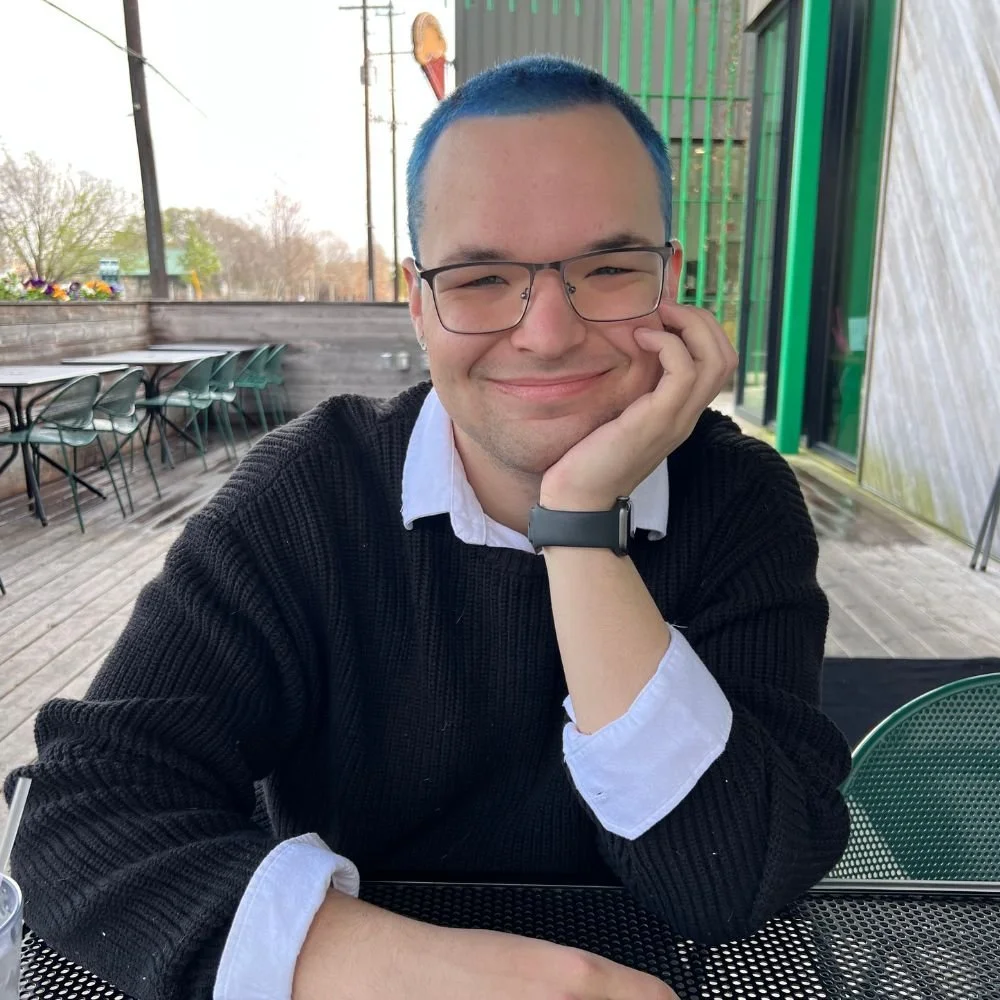
Writer and Director Lexi Bragg Takes Us Through Clear Water, Her Dream Turned Film
November 5, 2026 - INTERVIEW BY eli Fischer
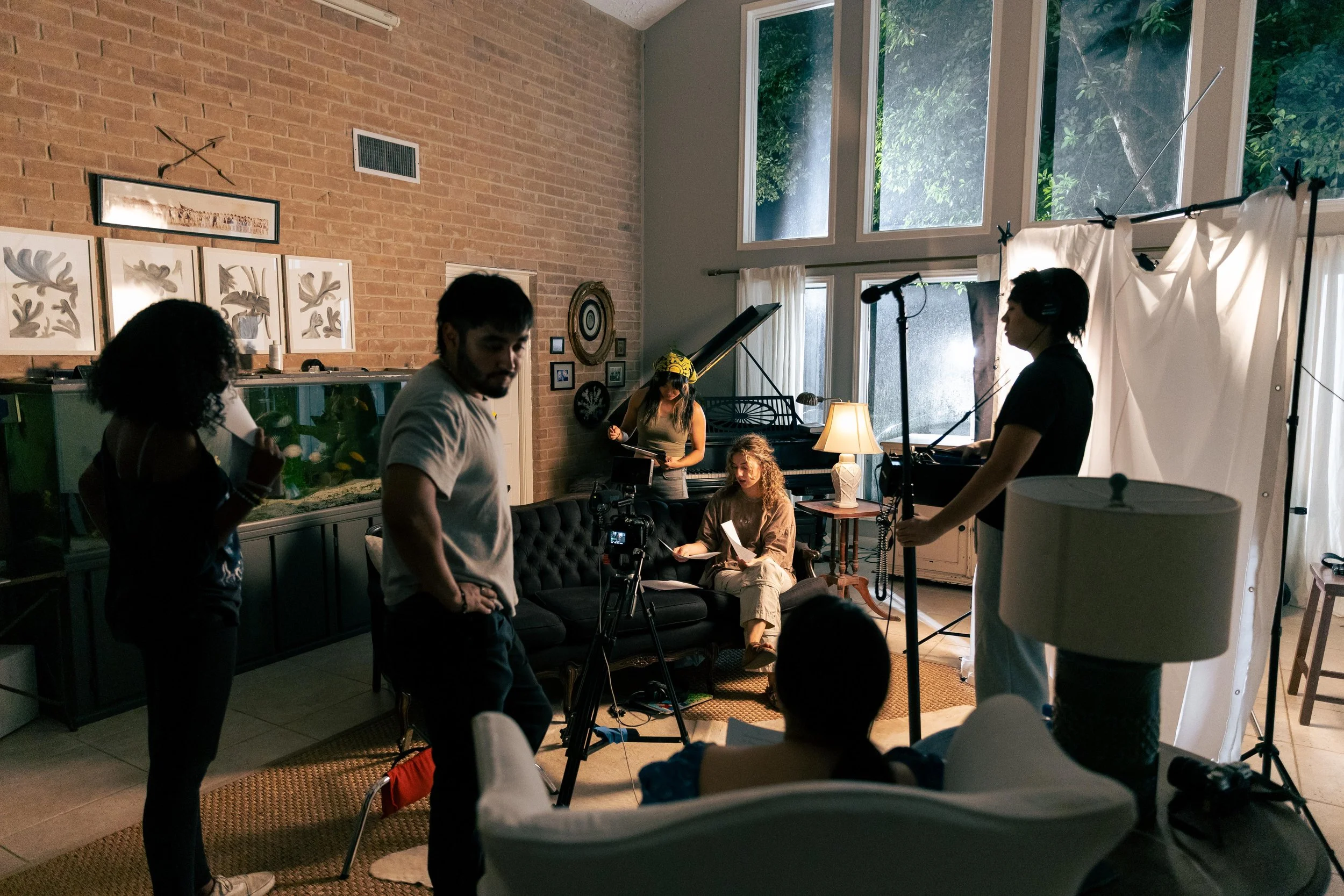
On the set of Clear Water. Photo courtesy of Lexi Bragg.
I'm really interested in the genesis of short films and I guess the genesis of this short film in particular, what was the first initial spark?
I used to live in Dublin and before freelancing picked up, I would dog-sit to make money. I dog sat for somebody in my town, Dunleary, which is a part of county Dublin, and the owner used to be a screenplay writer. I told her I was actually moving back to the United States for film because I can't work for myself with the visa I was on, and that's when she brought up that she used to write movies and short film scripts. I asked her if I could read all of them. That's what inspired the style because she's very good at writing. I learned about formatting and structure just by reading her stuff. She had something very similar to The White Lotus, lots of different characters and then it was also kind of a thriller/who murdered who type of thing. So not really like Clearwater, but quickly paced and character driven, which is something I had to learn.
So that’s what inspired me to start Clearwater. I feel like most first time filmmakers base their work off of their real experience, so that's what I did. I had the exact dream from the film in February 2025. It was right before I told everyone that I was going to move home and it was kind of a big deal because I had a full-time job and a boyfriend. I was going to therapy at the time because I was feeling super stressed about moving, but then I had that dream, and the therapist conversation [from the film] actually did happen. It was so vivid; I remember every detail.
That is so important for first time filmmakers to just wear your heart on your sleeve. I really enjoyed how the film has this layered sort of storytelling where there's this duality between the dream reality that we are introduced to at the beginning, and the therapist conversation. Can you maybe talk about the choice of that scaffolding for the film to relate between the themes of, coming home and feeling torn between two places?
I feel the dream informed me about my reality. I don't know if that makes sense, but the dream didn't exactly say what my subconscious mind was thinking, it revealed it in a picture way. It helped me process where I was at because, at the time, I was really unsure if I wanted to move back and I was looking for clarity everywhere. Then that dream was based on a childhood place I used to go to in Florida, where I was born. I don't know what that has to do with the film, but it’s something significant.
When you're working with film and you're working with dreams in particular, it's interesting to make a film about dreams from a dream. You have to trust a gut instinct, you know? How did you approach communicating your gut instinct to everyone you worked with?
I wasn't confident in my dialogue, so I really leaned into trying to find visuals to communicate what I was saying. I tried to make every single shot super intentional, like the water represents life, and my therapist explains that water and dreams usually means life because it's always flowing. Sometimes you're going up a current or down a current, but there's so many ways you can go about life. I tried to visually show that instead of talking about it too much.
Intentionality can get lost and especially in a frame, how did you go about planning for intentionality to make sure that you preserve your vision?
To be honest, I think my subconscious mind pulled from a lot of different films that really touched me for those beginning shots, specifically. One of them was The Outrun with Saoirse Ronan. It's very psychological and has quick cuts in between high stress moments, so I pulled from that. Also Ladybird, there's something about her [Saoirse Ronan] character that I felt really inspired by. I just pulled from all parts of it, but maybe mostly how she didn’t understand herself. It's a compilation of years of inspiration and my taste.
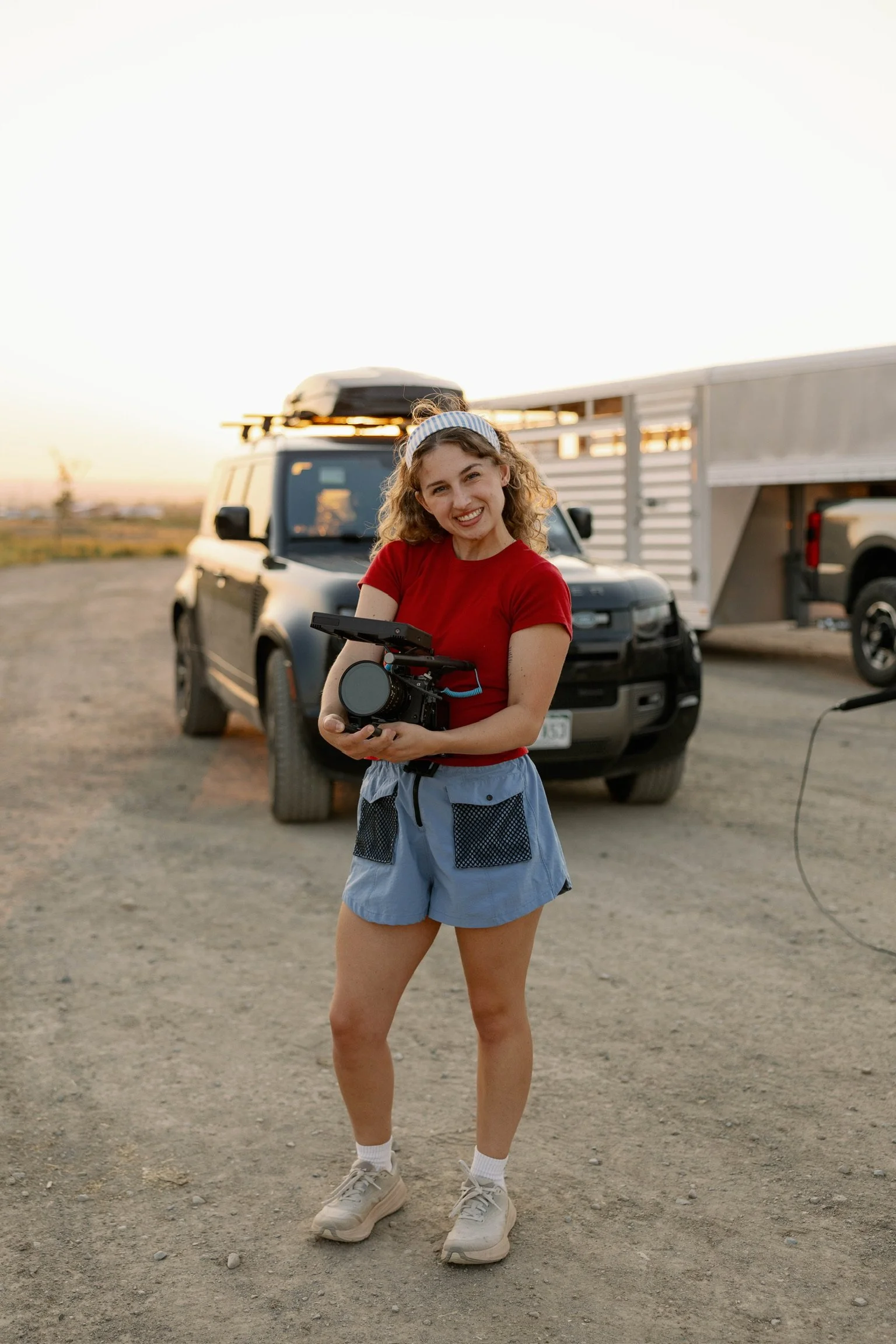
Courtesy of Lexi Bragg
You're wearing a lot of hats on this film as the writer, director, and actor. What do you feel like you were able to learn from all of those roles and what do you want to carry with you to your next project?
I've thought so much about it, and I've decided I don't want to be an actor. I love directing, I had a lot of fun. I worked with two different DPs and I had a lot of fun overcoming the challenge of making it feel like a consistent look, like it's coming from the same camera. I'm also an editor, so I’m thinking about the end product, but leaving room for people to give their ideas as well was really fun. I think I just learned that I do love filmmaking.
What I love about editing so much is that it’s an artful skill and it's really underrepresented. Film editing only exists because film exists, it's the only thing that doesn't have its roots in something else – like acting is theater, directing is photography, writing has been around forever, but editing exists because movies exist. Could you talk about how your editing style helped tell the story?
Yeah, whenever I made a rough cut, I sent it to a few trusted friends, including my friend Chloe Yates, who’s now working for a law firm in New York. I trust her because we've been friends for almost ten years, so I asked, “what do you think? What’s missing or what would you add?” She said something like, “I feel like making a clock or tick sound between the dream and therapy scenes is a way of nonverbally distincting the therapy versus dream scenes.” It's kind of what I was saying earlier about showing and not telling. I feel like it helps people follow along, because, originally, I was thinking about color grading the dream scenes very saturated. I think I wouldn't have needed the sound if it looked that saturated, but after playing around with it, [the look] didn't feel right. Zaire [Folson] colored it – he's so talented and he helped get consistent colors. I just needed a way for people to follow along, since it is so short and some of the shots go back and forth pretty quickly; I didn't want people to get lost.
You talked about the relationship between this film and The Outrun, narratively and also as an inspiration. Do you think it was necessarily a conscious choice to be like, “oh, yes, I'm thinking of The Outrun while making it? Or was it more so you were able to look back and see the influence it had?
I think it was looking back. I'm learning this as I work on other projects, but I feel like the end product is stale whenever I put myself in a box. If I'm thinking about trying to make it look like The Outrun, then it usually ends up not serving the overall story well. I look back now and see that I was subconsciously very inspired by that [film]. I learn a lot about my subconscious mind when working on these projects . . . even through the music, or specific choices, I don't always know why I do it, I just know that it feels right. Then it's not until six months later that I'm like, “oh, that's why I picked that.” It tells me a lot about what I was going through right then or my interests or something I was learning about. I feel like with Clear Water, I'm super glad that people have enjoyed it, but I almost feel like it was my own processing.
I mean, to me, that's what film is most simply. If I ever get the question of, “What's a goal for you with film?” I kind of hate the question just because, to me, I like to think of short films as little canvases. You get to wake up every day and you get to add a brushstroke. Sometimes you get a finished painting and then you have another canvas. It's more the artistic process of the catharsis. I was interested in your process of having this dream and building something out from the dream. Did you ever feel conflicted between sticking to either the dream or reality?
I usually gravitate towards leaving it open for interpretation, because I don't want to control what people think of the story or, I can't control it anyway. I think that’s actually quite fun and it tells me a lot about other people and what they get from it. I would say I gravitate towards less dialogue and a more open interpretation – just put it out there.
I'm reading “Directing Actors” by Judith Weston. That's a great film book, but one thing I'm learning as a director is asking the actor, “how do you connect to the script?” . . . And then, in order for me to direct it, I have to find what is relatable to the characters, and it's going to be different for everybody. Whenever it comes to Clear Water, hearing how people connected to it is always so different. I think if I spelled out what it exactly meant to me, that could maybe leave less room for people to connect to it.
You mentioned you were writing another script?
Yeah, so I'm directing a pilot, which will give me practice for the script that I'm writing. I'll leave it untitled because I'm still trying to figure it out. It's also inspired by true events, by my Oma. She had a really interesting childhood and I want to mix it with my own personal experience to make this fictional character with a little bit more dramatic events. I would say it's like a mix of Lady Bird and Train Dreams . . . I'm in no rush with that project . . . I've heard from all different types of people and different artists, there's no need to rush it. It's a very personal story and so I see it as more of a 2-5 year project. I'm trying to develop my skills by reading a lot of books about screenplay writing and directing. Taking on smaller projects to support getting better at thought. I used to be in a rush for my next project, but now not so much.
I do love your socials where you have like these little beautiful videography visuals on there. It's like these really small, intimate macro moments. Is that something that you would want to explore with future projects?
A lot of the frames that are on my Instagram, I'm using to build the mood board for my feature. I want to get mini practice in. A lot of the stuff on my Instagram, I film on my iPhone, because it'd be like “in the moment” stuff. I'll do a little color grading in Davinci Resolve, but I just want to constantly make something small, even if it's not every day, but something that contributes to something. My little challenge has been to try and get clips from the mood board, like the one of my sister with the seagulls. I want that to be the movie poster of my feature. Just little things like that. I feel like with social media, it's such a weird place to be, but I try to use it to develop my skills and then also build my personal brand. I have found that it's brought opportunities. People will be interested in my work or want to work with me, it's a good way to make money to support my filmmaking career.
That kind of goes back to what I referenced earlier, it's like you have this big canvas in the corner of your room and you can wake up every day and you pick up a brush. You're just building out your total picture.
That's a part of my canvas, I suppose, my Instagram. Sometimes it feels like I’m posting stuff for the ego. I try to split up my content into creatively fulfilling little things and then stuff that might make me money or get me exposure or whatever. The ego side helps me financially to support the creative side. There have been weeks that I don't add anything because I actually feel like adding to the canvas is shutting my laptop and going for a walk, or breathing fresh air instead of being in my office all day. I try to really think through how to spend my time.
FOLLOW ALONG WITH LEXI
On Instagram @lexi.bragg