THE POETRY OF NEOREALISM
A Retrospective on:
Killer of Sheep
August 21, 2025 - by eli fischerWhen I think of the idea of film highlighting the working experience, few films have been able to translate this sentiment more clearly and concisely than Charles Burnett’s Killer of Sheep.
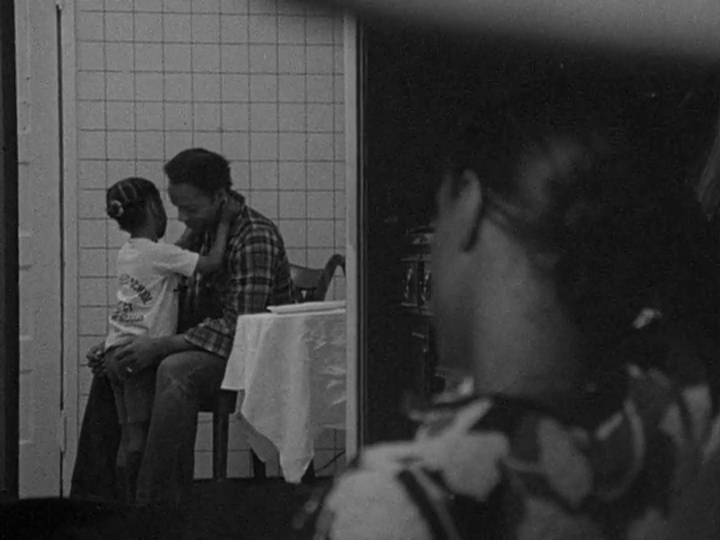
Killer of Sheep (1978) by Charles Burnett
The film, set against the backdrop of 1970s Los Angeles, follows an African-American man working at a slaughterhouse as he struggles with sleepless nights, grueling and monotonous work, and poverty in his house and community. Spawned from a movement of independent cinema in America during the late 60s and early 70s, a movement that focused on pure and unobstructed naturalism.
Burnett comes from a school of filmmakers that focused on neo-realism, in a sense, they crafted their inspirations around third-world independent cinema. The focus was an entirely independent craft, devoid of any bells and whistles. For Killer of Sheep, he wrote, shot, and edited the entire film by himself. The conceit and thesis of the film comes from a desire within Burnett to, “present Black people as real people, not as stereotypes and comedic characters that Hollywood, since Birth of a Nation, has imposed on us.” (Thomas, 2025). It is, at its absolute core, an independent picture. It is something that can only be created out of compassion and a storyteller's burning responsibility. A narrative film that is completely devised, full of takes, edited moments, characters, and contrived narrative, yet feels so real that it borders on documentary filmmaking.
When a filmmaker decides to embark on this style of storytelling, when they decide to tell a story that no one else is telling and do it in a way that feels authentic to the experience of the subject matter, it requires precision. An intense and meditative precision that can only be achieved by valuing patience as an absolute and honest virtue. The film depicts the working class in a form we are not unfamiliar with, struggling to stay afloat, always worrying about their next meal, completely removed from any of life’s pleasures and joys. However, Killer of Sheep takes this sentiment and grounds it in this very simple truth, a truth that is also quite terrifying to realize and admit: that these characters are tethered to work because of the necessity of survival. There is a difference between working because you want to provide a better life for you and your loved ones and working because it has been chained to your very existence.
The setting of the film is no coincidence. Perhaps it could have reached a more general audience at the time if Burnett grounded it in the Jim Crowe era and shot it in the Deep South, but that’s not really the point of the film. Burnett is actively pushing against this storytelling, he is rebelling against this “approachable” stereotype. There’s less opportunity for an “approachable” film to remain memorable or to leave a cultural mark. While I do recognize the truth that most of you reading this may not have seen the film, I think that speaks more towards studio’s lack of confidence in movies like this one. Studios want movies like 12 Years a Slave (a generally well-received movie), something that feels distant. They don’t want to confront audiences with contemporary slavery. They don’t want to address the fact that we’re all working until we die, and that communities like the one in Burnett’s film are not given other opportunities. It is work that is threaded to survival.
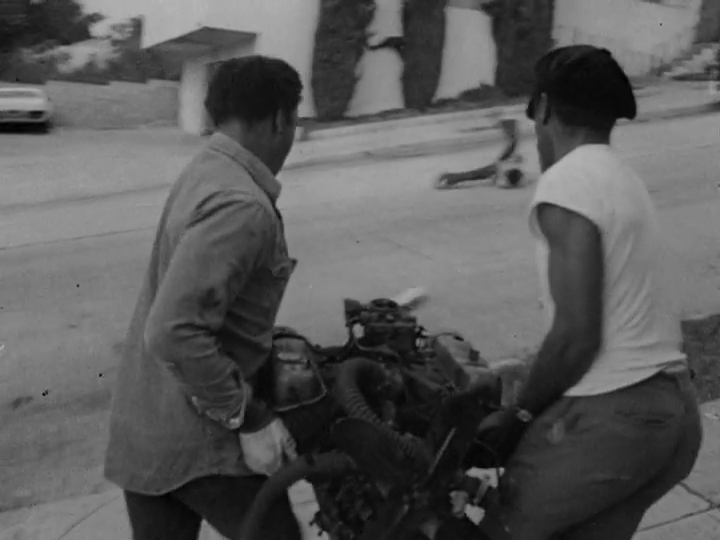
The characters in his films are blue collar because they have to be, they are given no other option. We see this in one of the film's more heartbreaking scenes, Burnett’s main character, Stan, finally gets enough money to get a new engine for his truck. He and a friend of his struggle to load the hulking piece of equipment through alleyways and into the bed of their truck, and once it’s in there they don’t get the chance to secure it. Taking a risk, Stan gets in the car and drives away and hits a bump, the engine falls out, and it’s ruined. We then watch through the rear view mirror as Stan drives away from his dream. It’s Sisyphean in that he works and struggles and seemingly takes a chance, but if the boulder rolls back over him and down the exact path he tried to roll it up, then he’s left in a worse position than when he started. Subjected to a never ending life of struggle.
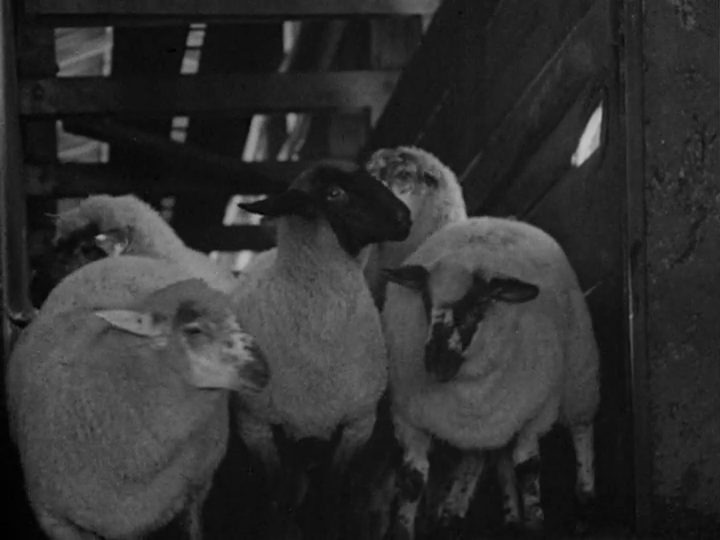
Killer of Sheep exists because Burnett felt the call of responsibility. The call to translate not only this story but stories and images like it that had never been brought to screen before. Images of young black children leaping from roof to roof just because it was something to do, images of a tired and “end of his rope” worker sitting in his empty kitchen at 3 am, images of the factory where he worked and the dead sheep hanging from hooks. Dead sheep that represent the societal shift of emphasizing production over purpose. The neighborhood in Killer of Sheep is a representation of the grueling work inside a capitalist system. Of how those systems abandoned, and I suspect never had any interest, in the workers that inhabit them.
This film is not important because of the way it was made, or the influence it would go on to have on independent filmmaking, this film is important because of its demonstration in empathy. Its placement of value on communities that are underrepresented and stories that are under told. It is important because it forces audiences to analyze the burden and the duty of responsible storytelling and the powerful tool that film can be for this exact purpose. But mostly, Killer of Sheep is an important film because it is rebellious and it is unapologetically intentional in its themes. Bold and provocative while slow and meditative, I personally think you would be hard pressed to find a film that better translates the working experience better than Killer of Sheep.